


Climate action
Historic climate action win: Disability Caucus secures official recognition
The Disability Caucus has been officially recognised, marking a historic milestone in inclusive global climate governance. For the first time, persons with disabilities and their representative organisations have a formally acknowledged platform within the climate negotiations to ensure their voices are heard and meaningfully integrated into policies, plans and frameworks that directly affect their lives and communities. Persons with disabilities are disproportionately affected by climate impacts, yet their perspectives have long been overlooked in adaptation, mitigation, and resilience strategies.
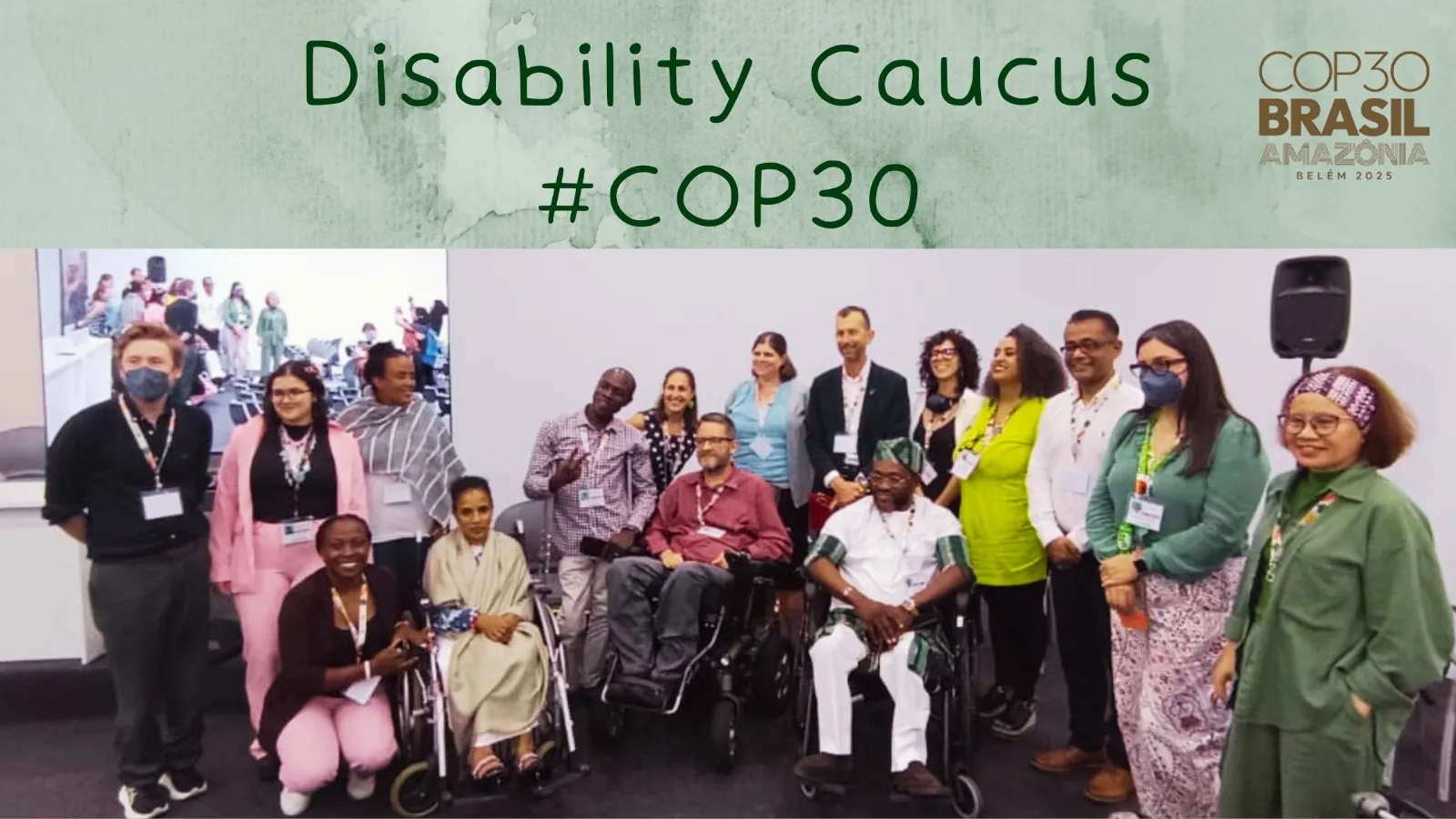
While United Nations Framework Convention on Climate Change (UNFCCC) has provided opportunity over the years for the disability movement to speak and contribute to discussions, the establishment and recognition of a Disability Caucus as an informal group of stakeholders active within in the UNFCCC process firmly signals the long-overdue commitment to equity, accessibility and human rights at the heart of climate policy. It’s a breakthrough that reflects years of sustained advocacy by disability rights organisations and allies who have insisted that climate justice must include everyone. The recognition of a Disability Caucus, which comes after continued effort by disability grass roots activists stretching back nine years from COP 21, also strengthens the global disability movement by providing a coordinated space for engagement, capacity-building, and unified advocacy within technical climate processes. It affirms that effective climate action requires solutions designed with - and informed by – the lived experiences of persons with disabilities. The current caucus consists of more than 120 organisations, 12 of which are already accredited by the UNFCCC. As the world faces escalating climate challenges, embedding disability perspectives based on their experience will lead to responses that are more accessible, sustainable and just.
This announcement is not the end of the road: as a Caucus, everyone will continue working towards full Constituency status with UNFCCC to ensure persons with disabilities are given equal rights and opportunities available to full constituencies within the negotiation process.
What has happened this week is a huge victory for persons with disabilities and a profound step forward for global climate justice and for creating a climate agenda shaped by and accountable to all.
This milestone proves that inclusive climate action is not optional; it is essential for a just and resilient world. Shitaye Astawes Advocacy Director, African Disability Forum
After days of uncertainty, full accessibility guaranteed for 34th Session of the Committee on the Rights of Persons with Disabilities 17.02.26Last week, the United Nations Office at Geneva announced that accessibility services would not be provided for the 34th session of the Committee on the Rights of Persons with Disabilities (CRPD) or for disability rights-related panels at the 61st session of the Human Rights Council. This was due to the ongoing liquidity crisis at the United Nations (UN).The announcement raised concerns among organisations of persons with disabilities, as it would have excluded Deaf and hard-of-hearing participants and others who require captioning and the International Sign of important public discussions.
For the first time, our lived experiences are not an afterthought - they are shaping the future of global climate policy. Juan Ángel De Gouveia President, Latin American Network of Organizations of Persons with Disabilities and their Families (RIADIS)
The International Disability Alliance (IDA) responded immediately, stating that the decision was discriminatory and inconsistent with human rights obligations. IDA sent formal letters to high-level UN officials responsible for conference management and human rights, urging urgent action. IDA recognised the financial difficulties facing the UN system but requested solutions to ensure that persons with disabilities are not excluded from processes concerning their rights. By the end of the week, IDA received written confirmation that discussions had begun to reprioritise funding for accessibility services. The CRPD Committee then updated its website to confirm that the 34th session would proceed as planned. The Committee also published the full Programme of Work and an Informative Note for participants. This situation has led organisations of persons with disabilities to emphasise that accessibility services are not optional. They are the minimum requirements for the proper functioning of human rights mechanisms, at least those on the rights of persons with disabilities. Lack of accessibility limits participation and weakens monitoring. IDA welcomed the response from UN leadership and hopes that accessibility will remain a priority across all UN activities related to the rights of persons with disabilities and be expanded to other areas. This means restoring previous levels of accessibility, including national sign language interpretation during dialogues with States, full provision of reasonable accommodation for Deaf Committee members, and reasonable accommodation for all participants. It also entails strengthening the implementation of the United Nations Disability Inclusion Strategy.
In the Pacific, where climate impacts are already at our doorstep, this recognition will help ensure that persons with disabilities are part of the solutions protecting our islands and our future. Damian Griffis Co-Chair, Pacific Disability Forum
This episode emphasises a key takeaway: accessibility services are fundamental, not discretionary, to protecting the rights of persons with disabilities within international mechanisms. While confirming these services for the CRPD Committee’s 34th session is important and welcome, the disability community stresses that accessibility is mandatory and must be guaranteed, not jeopardised by administrative austerity measures that disregard the basic principle of non-discrimination.
This recognition sends a clear message: climate justice must include persons with disabilities at every decision-making table. Maulani Rotinsulu Director, ASEAN Disability Forum
IDA welcomes progress on accessibility while calling for consistent implementation across UN meetings, including captioning, sign language interpretation, accessible documents, webcasting and inclusive hybrid participation.
IDA Media
Contact: media@ida-secretariat.org