

Upcoming
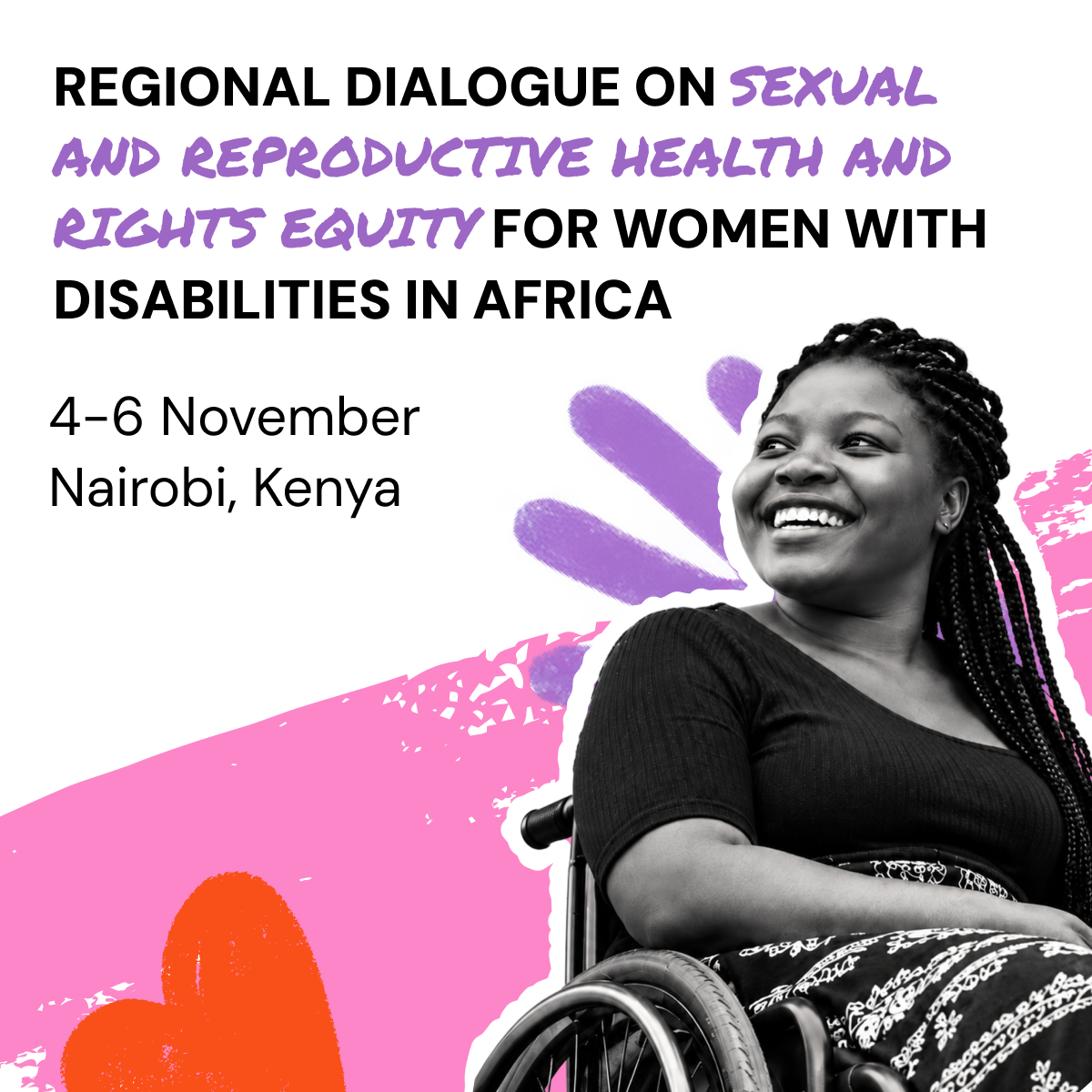
Regional Dialogue on SRHR Equity for Women with Disabilities in Africa
Regional Dialogue on SRHR Equity for Women with Disabilities in Africa
Marking 20 years of the CRPD, women with disabilities and health providers from across Africa will gather in Nairobi to share what works, co-create solutions, and set priorities for the next decade of sexual and reproductive health and rights.
About the event
The African Disability Forum (ADF), in collaboration with United Disabled Persons of Kenya (UDPK) and the International Disability Alliance (IDA), will host a three-day regional dialogue on sexual and reproductive health and rights (SRHR) equity for women with disabilities in Africa.
The dialogue will bring together Ministries of health, women with disabilities, organisations of persons with disabilities (OPDs), health providers, representatives of World Health Organization and other civil society organisations. Over three days, participants will reflect on 20 years of advocating for disability-inclusive SRHR, showcase solutions led by women with disabilities, visit health facilities in Nairobi where OPDs and health workers are working in partnership, and agree on core priorities for the decade ahead.
The overall objective is to strengthen collaboration, understanding and accountability between women and girls with disabilities and health providers in order to improve access to inclusive, accessible, affordable, acceptable, respectful and quality SRHR information and services across the African region.
Specifically, the dialogue will:
•Facilitate dialogue between women with disabilities and health providers to co-create practical solutions for more inclusive SRHR service delivery;
•Increase health providers’ understanding of disability-inclusive, rights-based and gender-responsive SRHR; and
•Support peer exchange on building the leadership of women with disabilities in SRHR and promoting SRHR equity.
Why SRHR equity for women with disabilities matters
Persons with disabilities make up 16% of the global population, an estimated 1.3 billion people, according to the WHO Global report on health equity for persons with disabilities. Around one in five women worldwide is a woman with a disability.
Women and girls with disabilities have the right to sexual and reproductive health and rights on an equal basis with others. Yet they are frequently excluded from SRHR decision-making, programme design, budgeting, service monitoring and policy implementation, even though these processes directly affect them. As a result, their lived experiences and priorities are not consistently reflected in health services, SRHR programmes or community outreach.
Across Africa, women and girls with disabilities face multiple and intersecting barriers based on gender and disability. These include stigma and discrimination, harmful stereotypes about sexuality and motherhood, inaccessible health facilities and information, communication barriers, limited reasonable accommodation, gaps in health workers’ knowledge, and weak participation in the decisions that affect their health and wellbeing.
In communities and households, discriminatory beliefs can portray women and girls with disabilities as asexual, incapable of forming relationships or parenting, or unable to make decisions about their own bodies. These attitudes contribute to the denial of autonomy, coercive practices, abuse, violence, forced or substituted decision-making and reluctance to seek care.
Health providers, for their part, often work within systems that offer inadequate guidance, training, resources, accessible infrastructure or referral mechanisms for disability inclusion. Even committed providers may lack practical knowledge of how to communicate with persons with disabilities, provide reasonable accommodation, safeguard autonomy and informed consent, and adapt services in ways that are both respectful and clinically appropriate.
20 years of the CRPD: building on progress
Over the past 20 years, the CRPD has catalysed national reforms on inclusive SRHR for women with disabilities. The normative framework has been strengthened, and women with disabilities have gained greater agency to take part in health equity decision-making. Campaigns led by women with disabilities, in collaboration with health facilities and communities, have contributed to health system reforms.
Collaboration between women with disabilities and health workers directly improves access to SRHR information and services. When women with disabilities are meaningfully engaged in identifying and dismantling barriers such as discrimination and communication barriers and are supported to co-design inclusive and accessible services, SRHR services become more inclusive and equitable. This dialogue is designed to strengthen exactly that collaboration.
Programme overview
The programme below is provisional and may be subject to change.
DAY 1
Reflecting on 20 years of the CRPD and solutions led by women with disabilities to promote SRHR equity
Session 1: Opening
Session 2: 20 years of strengthening norms and standards on SRHR
Session 3: Intersectionality and the SRHR experiences of women with disabilities
Session 4: OPD-led solutions: showcasing collaboration with health workers and communities
Session 5: Building the leadership of women with disabilities in SRHR advocacy
DAY 2
Showcasing the leadership of women with disabilities in promoting SRHR equity
Session 6: Site visit led by a national OPD in Kenya
DAY 3
Charting the way forward
Session 7: Reflections and lessons learnt from the site visit, a Lancet consultation, and a WHO consultation on SRHR
Session 8: Looking ahead |
Session 9: Closing
Organisers
•African Disability Forum (ADF), a continental forum that unifies and amplifies the voices of persons with disabilities in Africa, and a regional member of IDA.
•United Disabled Persons of Kenya (UDPK), the federation of organisations of persons with disabilities in Kenya.
•International Disability Alliance (IDA), a global alliance of networks of organisations of persons with disabilities working together to advance disability rights worldwide.